What I Got Wrong Rolling Out New Systems (And What Finally Worked)
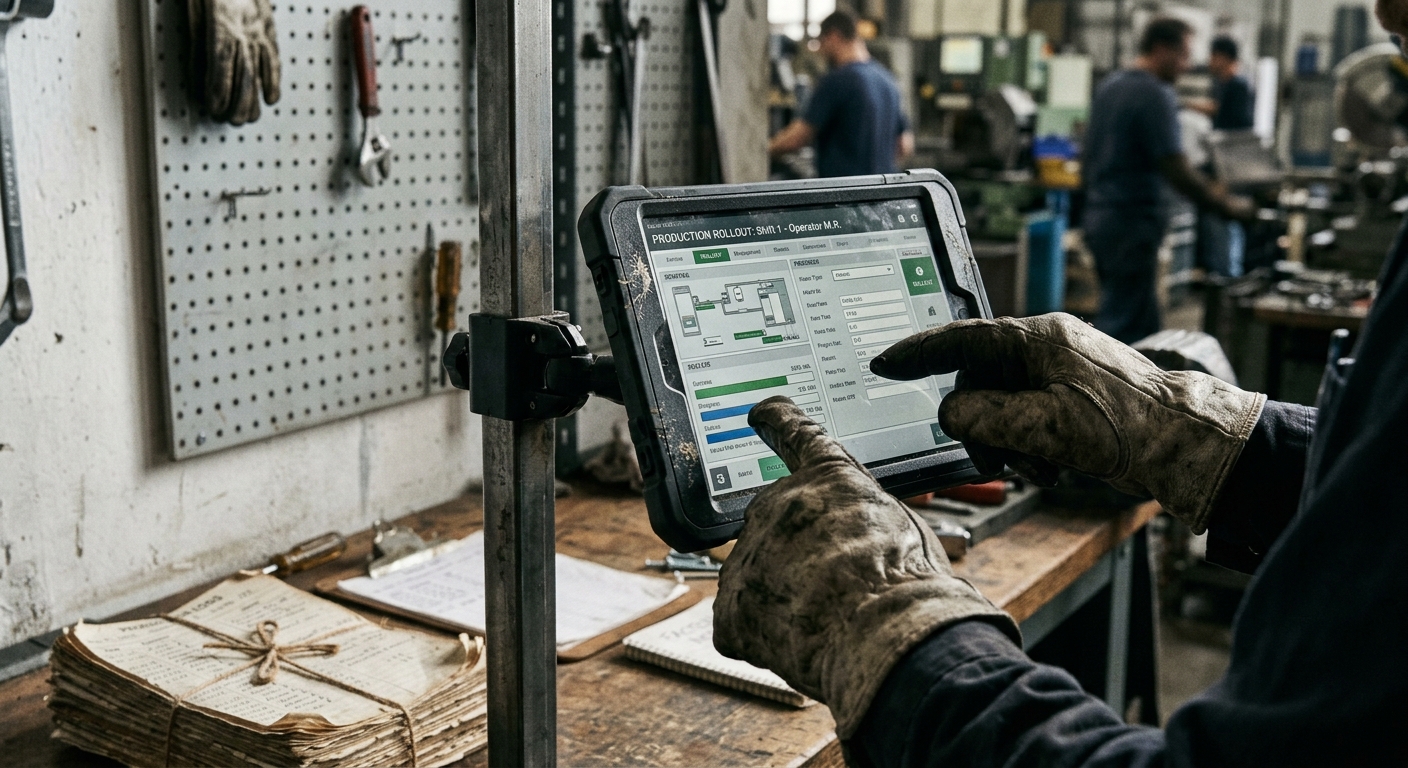
The first time I rolled out a new system on a floor I was managing, I made the mistake most people make. I assumed everyone would see it the way I did.
Why management and the floor see the same rollout differently
From where I sat, the new system was obviously an improvement. Less paperwork, faster reporting, better visibility, an easier month end. From where an operator stood, running the same line they'd run for years, it looked like something else entirely. Extra steps added to a shift that was already busy. A tablet to fumble with instead of a pen they could use with gloves on without thinking about it. A screen that seemed to exist so someone in an office could see what was happening, without making the operator's own job any easier.
Neither view was wrong. That was the uncomfortable part to accept. I wanted the data. They wanted to get through the shift without a new obstacle in the way. Both of those are completely reasonable things to want, and most software rollouts fail because someone tries to force the second group to care about the first group's problem.
The rollout that taught me the most
I remember one changeover where we introduced digital checks to replace a paper form that had been used for years. On paper, it was a straightforward upgrade. In practice, the first week was rough. Operators who'd filled that form out from memory for a decade now had to tap through fields on a device that felt slower than what they'd replaced, at least until they got used to it. A couple of them stopped filling it in properly and just tapped through as fast as possible to get back to the actual work, which meant the data coming out the other end was worse than the paper version, not better.
That wasn't a training problem, even though it looked like one at first. It was a fit problem. The system we'd brought in had been built to work across a lot of different plants doing a lot of different things, which meant it made sense to whoever was running the demo, but not to the person standing at that specific machine filling it in every hour. Something built to fit every operation ends up fitting none of them particularly well.
What actually changes an operator's mind
The rollouts that worked, in my experience, all had one thing in common. The system had to give the operator something back, not just take their time and hand the result to someone else's dashboard. When a digital check could flag a problem on the spot instead of it being found three days later in a report nobody read in time, that mattered to the person on the floor. When a tablet showing shift performance meant they could actually see how they were tracking instead of finding out secondhand, that mattered too.
The moment it stopped being purely a reporting tool for management and started being something that made an operator's own shift easier or more informed, resistance dropped fast. Not because they suddenly cared about the data for its own sake, but because the system was finally doing something for them, not just about them.
What I'd tell anyone rolling out new software now
Ask what the operator gets out of it before you ask what management gets out of it. And be honest about whether the system you're bringing in was actually built with someone like them in mind, or just built to be generic enough to sell into every plant regardless of what happens on that specific floor. If the honest answer is nothing, or "it's whatever fit everyone," you've got a rollout problem waiting to happen, no matter how good the reporting looks from the other end.
If you're in the middle of that exact transition right now, I've written more on the practical side of moving off paper systems in Spreadsheets vs MES: When You've Actually Outgrown Excel.